
"rainy day coffee"
2000 article(s) found

A cup of coffee, a lifetime.
The night is already very late, and the rain is still beating on the window. A sad rainy night, a person, a cup of coffee, such a night I can not sleep. In the noisy world, wine and coffee have been deeply integrated into people's lives. Cafes and bars can be seen everywhere in the city, whether in bustling neighborhoods or secluded alleys. Where are the lights and drinks?

La Minita Flower God, La Tisa Manor, Farahan Plateau, Guatemala
To really understand the flavor changes and product differences of coffee beans is to understand the production place and growers, different manors with different flavors, or different flavors on different hills of the same manor, and the story behind each coffee bean is what the fragrance wants to know. It can be traced back to which plot of the estate where the beans came from, or which cooperative or which farmer, chasing the flavor of the region. To

What is the uniqueness of the alpine environment on the Blue Mountains?
What is the uniqueness of the alpine environment on the Blue Mountain? 1. Low latitude, close to the sea, affected by equatorial warm current and northeast trade wind, humid climate, good hydrothermal conditions, affected by topographic uplift, rainy and foggy on the mountain, diffuse light scattered through clouds is very conducive to the growth of coffee. 2. In the alpine area, the drainage condition is good and the soil permeability is good. 3. High altitude, low temperature and growth cycle.
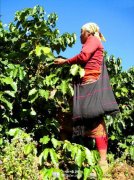
On Coffee planting Technology
1. The cultivation of strong coffee seedlings 1. The selection of nursery land is close to water source, convenient for transportation, loam or sandy loam with loose and fertile soil, deep soil layer, good drainage, paddy field with PH value of 66.5 or early nursery land, and close to coffee garden. Turn over 20cm30cm meters to make fire and burn the soil, hoe fine and remove stones, branches and roots before sieving, or use mountain humus, add 8
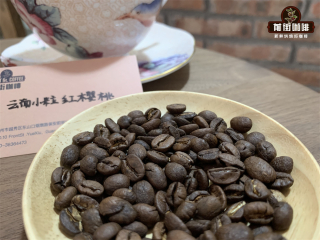
Yunnan small Grain Coffee belongs to Arabica? Yunnan coffee species and flavor and taste characteristics of producing areas
Professional coffee knowledge exchange more coffee bean information please follow the coffee workshop (Wechat official account cafe_style) front street-Yunnan small grain coffee introduction Yunnan coffee cultivation history can be traced back to 1892, large-scale cultivation of coffee is the mid-50th century, but also the first coffee planting base in China

Panamanian Coffee, introduced by Stonewall Manor in La Honnei, Pokuit, Panama.
Professional coffee knowledge exchange more coffee bean information please follow the coffee workshop (Wechat official account cafe_style) La Honnei Stone Wall Manor is located in Panama Pokuit producing area of 1750-2400 meters Baru volcanic hillside, between two lava flows, a micro-climate area, where the rainy season and dry season are very clear, May to December is the rainy season, and January to April because
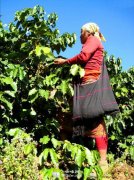
Coffee planting technology
1. The cultivation of strong coffee seedlings 1. The selection of nursery land is close to water source, convenient for transportation, loam or sandy loam with loose and fertile soil, deep soil layer, good drainage, paddy field with PH value of 66.5 or early nursery land, and close to coffee garden. Turn over 20cm30cm meters to make fire and burn the soil, hoe fine and remove stones, branches and roots before sieving, or use mountain humus, add 8

Description of Rwanda Coffee Flavor with more uniform drying; introduction to the taste characteristics of fine coffee beans
Rwanda is located in the south of the equator in east-central Africa, a landlocked country. It is bordered by Tanzania to the east, Burundi to the south, Zaire to the west and northwest, and Uganda to the north, with a land area of 26338 square kilometers, ranking 149th among all countries in the world and close to Burundi, Macedonia, Haiti and Albania. Rwanda is located in east-central Africa, bordered by the Democratic Republic of the Congo to the west.

Introduction to the characteristics of Malaba Coffee Flavor Manor in Rwanda
The watershed between the Congo basin and the Nile basin runs through Rwanda from north to south, with about 80 per cent of the country draining from the Nile and about 20 per cent from the Ruzi River and Lake Tanganyika. The longest river in the country is the Niabalongo River (Nyabarongo River) in the southwest, which turns north, east and southeast and flows into the Luwuwu River to form the Kagaila River.

How to make Italian Creative Coffee and share the production methods of several Italian Special Coffee
Sharing several special coffee making methods Kalua coffee is said to be better suited to rainy days in summer in Guangzhou, except for hot dog days, even continuous plum rain. Imagine that it is raining heavily in the street and your shoes and trousers are drenched. Passing by a warm cafe and having a cup of Kalua coffee based on sweet wine is enough to fill the empty mood.

What are the famous manors in Guatemala? Visit Guatemala producing areas and manors and eight major producing areas
To really understand the flavor changes and product differences of coffee beans is to understand the production place and growers, different manors with different flavors, or different flavors on different hills of the same manor, and the story behind each coffee bean is what the fragrance wants to know. It can be traced back to which plot of the estate where the beans came from, or which cooperative or which farmer, chasing the flavor of the region. To
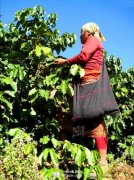
Brief introduction of Coffee knowledge Coffee planting techniques
1. The cultivation of strong coffee seedlings 1. The selection of nursery land is close to water source, convenient for transportation, loam or sandy loam with loose and fertile soil, deep soil layer, good drainage, paddy field with PH value of 66.5 or early nursery land, and close to coffee garden. Turn over 20cm30cm meters to make fire and burn the soil, hoe fine and remove stones, branches and roots before sieving, or use mountain humus, add 8-

What are the flavors and characteristics of the eight regions of Guatemala? What are the grades?
What are the flavors and characteristics of the eight regions of Guatemala? What are the grades? In 1750, Father Jesuit introduced coffee trees to Guatemala, where German colonists developed the coffee industry in the late 19th century. Today, most of the coffee industry is produced in the south of the country. Coffee in Guatemala Origin: Sierra Madre Fire
Cultivation techniques of High-quality Coffee trees
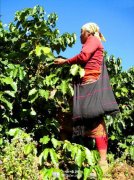
1. The cultivation of strong coffee seedlings 1. The selection of nursery land is close to water source, convenient for transportation, loam or sandy loam with loose and fertile soil, deep soil layer, good drainage, paddy field with PH value of 66.5 or early nursery land, and close to coffee garden. Turn over 20cm30cm meters to make fire and burn the soil, hoe fine and remove stones, branches and roots before sieving, or use mountain humus, add 8-

The special function of black coffee: forecast the weather
On a rainy day, throw a cube sugar into a black coffee and observe the bubbles released by the cube sugar without stirring. If the bubbles gather in the center, the pressure is very high and the weather will clear up soon. The attachment of bubbles around the cup indicates that the air pressure is very low, either heavy rain or snow. The surface tension formed by the oil of coffee beans is the key factor to determine the position of bubbles. Climate factors are not

Introduction of varieties in producing areas with long-lasting aroma and taste characteristics of coffee from Kimmel Manor, Rwanda
Rwanda has a temperate and tropical plateau climate, and because of its high altitude, its temperature is lower than that of typical equatorial countries. The daily temperature in Kigali, which is located in the middle of the country, is generally between 12 and 27C, with a relatively wide range of fluctuations throughout the year.

Introduction to the planting Climate of Coffee in Yunnan, China
At present, Yunnan coffee production is mainly distributed in Pu'er (180000 mu), Baoshan (100000 mu), Dehong (120000 mu) and Lincang (20 mu). Most of them are catimor varieties. At present, more than 80% of them are used as raw materials for instant coffee processing, some are supplied to Nestl é, and some are exported to Europe and the United States by local traders. From the grading criteria of specialty coffee

Introduction to the planting Climate of Coffee in Yunnan Province
At present, Yunnan coffee production is mainly distributed in Pu'er (180000 mu), Baoshan (100000 mu), Dehong (120000 mu) and Lincang (20 mu). Most of them are catimor varieties. At present, more than 80% of them are used as raw materials for instant coffee processing, some are supplied to Nestl é, and some are exported to Europe and the United States by local traders. From the grading criteria of specialty coffee

Introduction to the planting Climate of Coffee in Yunnan, China
At present, Yunnan coffee production is mainly distributed in Pu'er (180000 mu), Baoshan (100000 mu), Dehong (120000 mu) and Lincang (20 mu). Most of them are catimor varieties. At present, more than 80% of them are used as raw materials for instant coffee processing, some are supplied to Nestl é, and some are exported to Europe and the United States by local traders. From the grading criteria of specialty coffee

Introduction to Kenyan Coffee Flavor characteristics of Kenya AB Kirin Yajia Longyedo Cooperative
Professional coffee knowledge exchange more coffee bean information please follow the coffee workshop (Wechat official account cafe_style) Kenya AB Kirinyaga Rungeto washed Kenya AB Kirin Yajia Longyado Cooperative washing Kenya AB Kirinyaga Rungeto washed production country: Kenya Kenya bean seed: SL34, K7, SL28 Origin: Kirin Asia Kiri